

A pillow block bearing is a pre-assembled unit that mounts a bearing insert into a housing, ready to bolt directly onto a machine frame.
Unlike loose bearings, the housing handles alignment, sealing, and shaft support in a single package — which is why they show up in everything from grain harvesters to bottling lines.
This guide covers: how pillow block bearings work, their components, 7+ types by housing shape and locking method, materials, common applications, sealing options, lubrication requirements, and a practical selection checklist.
Understanding Pillow Block Bearings
A pillow block bearing is a pre-assembled housing with a machined mounting surface, widely used in mechanical power transmission to support shafts and couplings.
The shaft runs parallel to the mounting surface; the mounting screws are typically perpendicular to it.
Inside the pillow-shaped casing sits a bearing insert, which can accommodate:
Rolling element bearings:
Or plain bearings (sleeve bearings, bushings), depending on the load and speed requirements.
Components of a Pillow Block Bearing
Component | Function |
|---|---|
Bearing Insert | The rolling element that directly supports the shaft and carries the load |
Housing / Block | Cast or pressed outer body that holds the insert and bolts to the machine frame |
Seals & Shields | Keep contaminants out and lubrication in — over 50% of bearing failures trace back to contamination |
Locking Mechanism | Set screw, eccentric collar, or adapter sleeve — secures the insert to the rotating shaft |
Grease Fitting (optional) | Zerk nipple allowing field re-lubrication without disassembly |
Pro Tip: A secure lock starts with precise shaft tolerance. See our H7 Precision Installation Protocol for exact specifications.

Fig 1 — Components of a Pillow Block Bearing
Structural Features: Self-Alignment
The bearing insert's spherical outer ring mates with a matching spherical bore in the housing.
This geometry lets the bearing compensate for shaft-to-surface misalignment of ±2° to ±5° without inducing edge stress — a major reason pillow blocks outlast plain shaft-mounted bearings in real-world installations where perfectly level mounting surfaces are rare.

Fig 2 — Self-alignment capability of pillow block bearings
What Is the Difference between Plummer and Pillow Block Bearings?
The difference between plummer block bearings and pillow block bearings is mainly about housing design, size, and application environment. In many industries, the terms are sometimes used interchangeably, but there are technical differences.
Feature | Plummer Block Bearing | Pillow Block Bearing |
|---|---|---|
Housing design | Usually a split housing (two-piece housing with a removable top cover) | Usually a one-piece housing |
Bearing replacement | Easier maintenance because the housing can be opened without removing the shaft | Usually requires removing the bearing unit from the shaft |
Size range | Commonly used for larger shafts and heavy-duty applications | Commonly used for small to medium shafts |
Load capacity | Designed for higher loads and harsh operating conditions | Designed for general-purpose loads |
Mounting style | Usually mounted on a base or pedestal | Usually mounted directly on a machine frame with bolts |
Typical bearings used | Spherical roller bearings, self-aligning ball bearings, tapered roller bearings | Insert ball bearings (UC type), self-aligning ball bearings |
Common industries | Mining, steel mills, conveyors, crushers, heavy machinery | Fans, agricultural machines, conveyors, packaging equipment |
Key Difference in Simple Terms
Pillow block bearing = compact, simple, general-purpose mounted bearing
Plummer block bearing = heavy-duty, serviceable, split housing bearing
A useful rule:
If the machine uses a small shaft and needs easy installation → choose a pillow block bearing.
If the machine uses a large shaft, high loads, and requires frequent maintenance → choose a plummer block bearing.
However, terminology varies by region. In North America, “pillow block” is often used broadly for many mounted bearing units, while in Europe and Asia, “plummer block” usually refers specifically to split housings for heavier applications.
Pillow Block Bearing Types
Pillow block bearings are categorized two ways: by housing shape and by locking method. Understanding both is essential for correct selection.
1. By Housing Shape
Standard Pillow Block Bearings
The most common form. The housing mounts vertically to a flat surface via two bolt holes, supporting shafts that run parallel to the base. Model prefixes: UCP, UKP, NKP+H, NAP.
Typical applications: conveyor belts, agricultural machinery, automotive systems, general industrial equipment, construction machinery.

Fig 3 — Standard Pillow Block Bearing (UCP series)
Short / Tapped Base Pillow Block Bearings
Narrower width than standard, with tapped mounting holes built into the base. Purpose-built for space-constrained installations where a standard housing won't fit. Model prefixes: UCPA (PA200, PA200A, PG200 series).

Fig 4 — Tapped Base Pillow Block Bearing
High Center Pillow Block Bearings
A raised housing places the shaft center significantly above the mounting surface — useful when surrounding components require shaft clearance. Model prefix: UCPH.

Fig 5 — High Center Pillow Block Bearing
Pressed Steel Pillow Block Bearings
Housing is stamped from high-quality carbon structural steel plate. Designed for applications where the mounting surface runs parallel to the shaft, typically at medium-to-low speeds and light loads. Lighter and less expensive than cast iron housings.
2. By Locking Method
The locking mechanism determines how securely and uniformly the insert grips the shaft — a critical factor for applications with reversing loads or vibration.
Locking Type | How It Works | Best For |
|---|---|---|
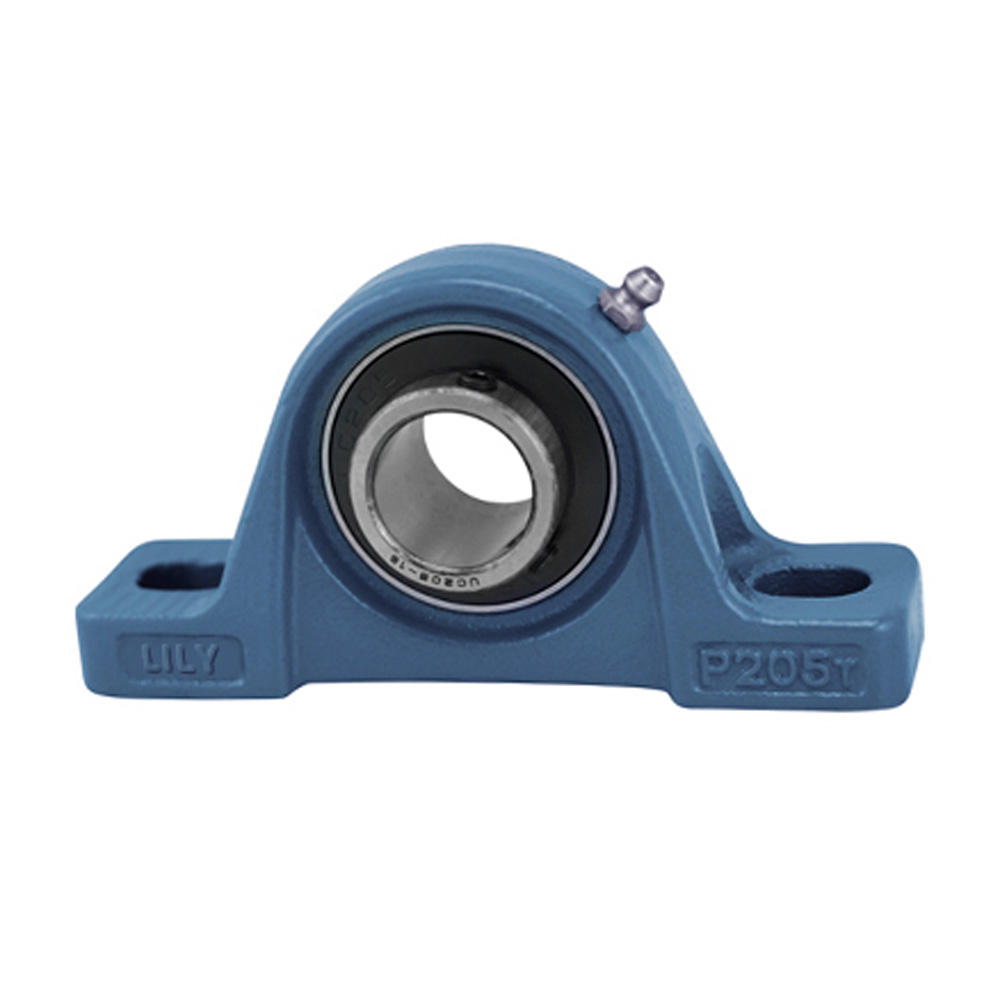
Set Screw | Screws tighten directly against the shaft OD | Light-to-medium loads, unidirectional rotation |
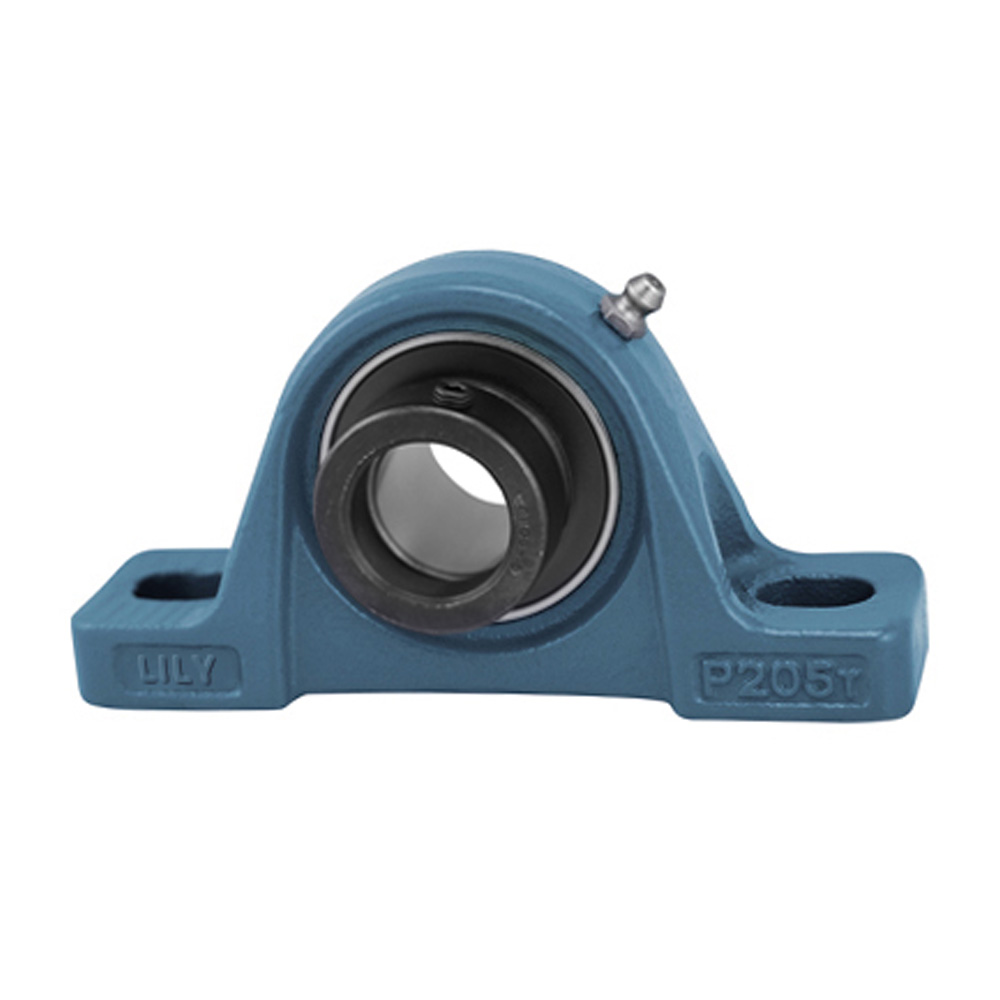
Eccentric Collar | Collar rotates off-center to clamp onto the shaft | Moderate loads, easier field adjustment |
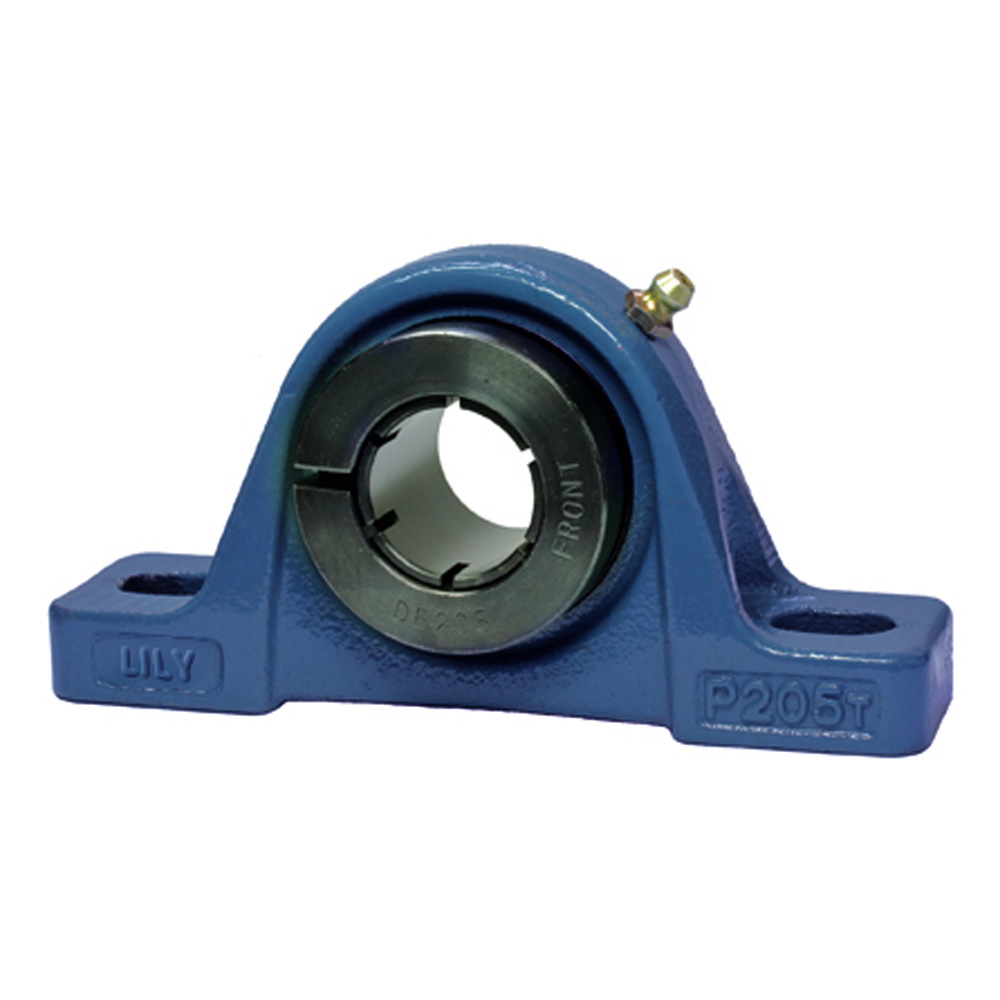
Concentric Collar | Collar clamps symmetrically onto the shaft | More balanced grip; reversing or oscillating loads |
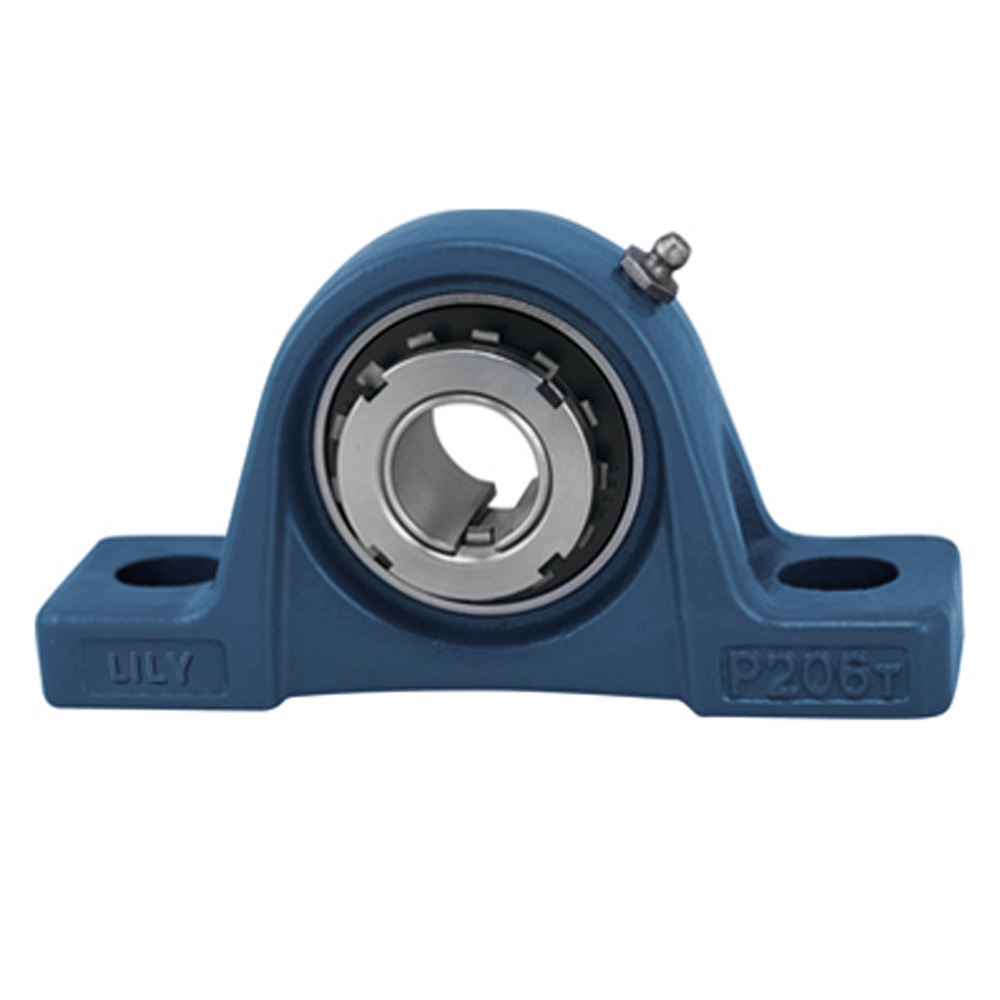
Adapter Sleeve | Tapered sleeve draws the inner ring tight onto a plain or stepped shaft | Frequent mounting/dismounting; non-standard shaft sizes |
Set Screw Locking
Eccentric Collar Locking
Concentric Collar Locking
Adapter Sleeve Locking
3. Split Pillow Block Bearings
Unlike single-piece housings, split pillow blocks divide into a base and a removable cap. This lets maintenance crews swap inserts without removing the shaft — critical on large conveyor lines where downtime costs can exceed $10,000/hour.
Common in: heavy conveyors, paper mills, power generation, mining equipment.

Fig 6 — Split Pillow Block Bearing
Common Materials of Pillow Block Bearings
Material choice affects fatigue life, corrosion resistance, operating temperature range, and total cost. Here's how the main options compare.
Bearing Insert Materials
Material | Key Properties | Typical Use |
|---|---|---|
AISI 52100 Steel | High hardness, excellent fatigue resistance | General industry — most common choice |
Stainless (440C / 304 / 316) | Corrosion-resistant, moderate load capacity | Food processing, marine, chemical plants |
Extreme hardness, low density, non-magnetic | High-speed, high-temp, or electrically isolated applications |
Housing Materials
Material | Spec / Strength | Best For |
|---|---|---|
Cast Iron (HT200) | 200 MPa tensile strength | General use; excellent vibration damping, cost-effective |
Cast Steel | Higher ductility than cast iron | Heavy loads, impact-prone environments |
Stainless Steel (304 / 316) | ≥515 MPa tensile strength | Washdown environments, chemical exposure |
Zinc / Aluminum Alloy | Lightweight, corrosion-resistant | Light-duty, weight-sensitive applications |
Thermoplastic (PBT / PE) | Non-metallic, chemical-resistant | Food processing, pharmaceutical, medical equipment |
Advantages of Pillow Block Bearings
Easy Installation
Pre-assembled and ready to bolt — no bearing press or specialized tooling required in most cases.
Self-Alignment
Absorbs ±2°–5° shaft misalignment, protecting against edge loading that shortens bearing life.
Combined Load Support
Handles both radial and axial loads in a single unit — no separate thrust bearing required for many applications.
Quieter Operation
The housing damping, combined with precision inserts, reduces noise versus open bearing alternatives.
️
Built-In Sealing
Factory seals protect against the contamination responsible for over 50% of premature bearing failures.
Cost-Effective
Standardized dimensions mean fast replacement, lower spare parts inventory, and predictable maintenance costs.
Robustness & Extended Lifespan
The enclosed housing protects the insert from mechanical damage and environmental exposure, extending service life under demanding conditions.
Less Frequent Servicing
Factory-sealed maintenance-free designs reduce re-lubrication intervals — or eliminate them entirely — cutting planned downtime.
What Is the Application of Pillow Block Bearing?
Due to their simple structure, self-aligning capability, and reliable performance, pillow block bearings are widely used in conveyor systems, agricultural machinery, industrial fans, food processing equipment, textile machines, and automation equipment. They are especially suitable for applications requiring economical, easy-to-maintain shaft support under moderate loads and speeds.
Pillow block bearings appear in virtually every sector that uses rotating machinery. Below are the industries where they're most heavily specified — and why.
Industry | Typical Equipment | Key Bearing Requirement |
|---|---|---|
Agriculture | Harvesters, balers, planters, grain elevator conveyors, fertilizer spreaders | Dust & moisture resistance; re-greasable every 200 hrs in field conditions |
Food Processing | Conveyors, mixers, ovens, bottling lines, cleaning equipment | FDA-compliant materials; stainless or thermoplastic housing; IP69K sealing |
Mining & Quarrying | Belt conveyors, crushers, screening equipment | Heavy radial loads; taconite-grade seals for abrasive particle exclusion |
HVAC & Fans | Fan shafts, air handlers, blowers | High speed; low noise; maintenance-free pre-lubricated sealed units |
Construction | Concrete mixers, cranes, compactors | Shock load resistance; heavy-duty cast steel housing |
Power Generation | Turbine auxiliaries, generator drives, pump shafts | Split housings for in-situ maintenance; high reliability |
Paper & Pulp | Dryer rolls, winders, conveyors | High temperature; corrosion resistance; labyrinth sealing |
Agricultural Machinery — Closer Look
Agricultural pillow blocks endure conditions that quickly destroy standard bearings: abrasive soil particles, humidity from rain and dew, and shock loads from uneven terrain.
In a typical harvesting season, a bearing might accumulate 500–800 operating hours in 3 months.

Food Processing — Closer Look
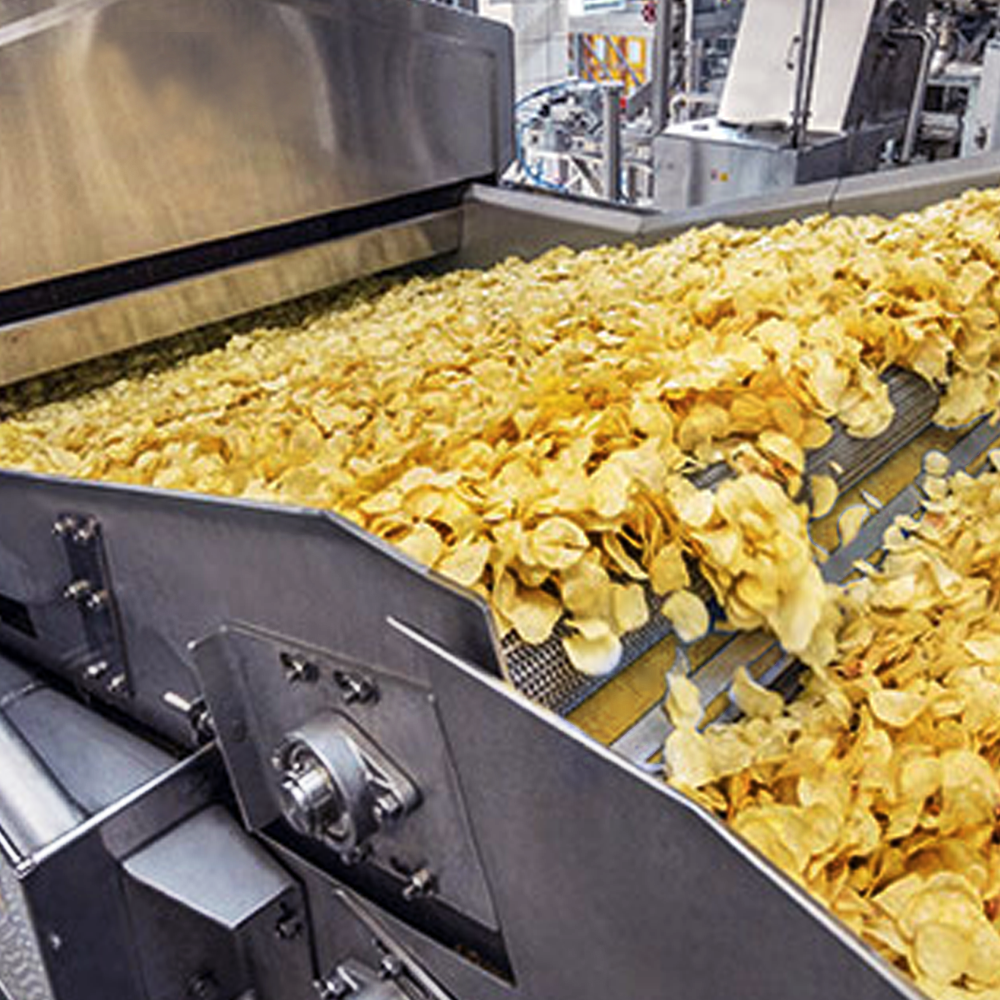
Food-grade pillow blocks must survive daily high-pressure washdowns (often at 80°C), resist cleaning chemicals, and never contaminate product lines.
Housings use AISI 304/316 stainless steel or FDA-approved thermoplastic; seals are designed to prevent grease migration into the food zone.
Sealing of Pillow Block Bearings
Over 50% of bearing failures stem from contamination. The right seal extends service life by 1.5× to 3×.
Six seal types are commonly used in pillow block applications:
For an in-depth comparison with selection guidance, see our Pillow Block Bearing Seals Guide: Lip vs. Labyrinth.
Lip Seals
Contact seals with a flexible lip that presses against the rotating shaft. Good contamination barrier but generates some friction and heat. Best for standard industrial environments with moderate contamination.
V-Ring Seals
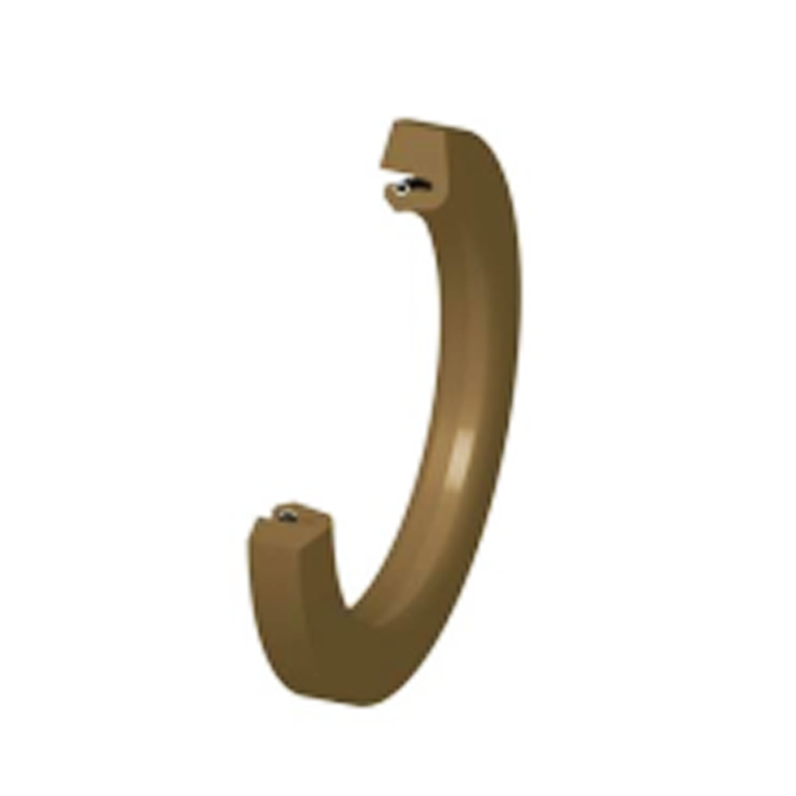
Self-centering rubber seals that accommodate shaft movement. Easy to install without special tools — well suited to vibrating equipment and agricultural machinery.
Felt Seals
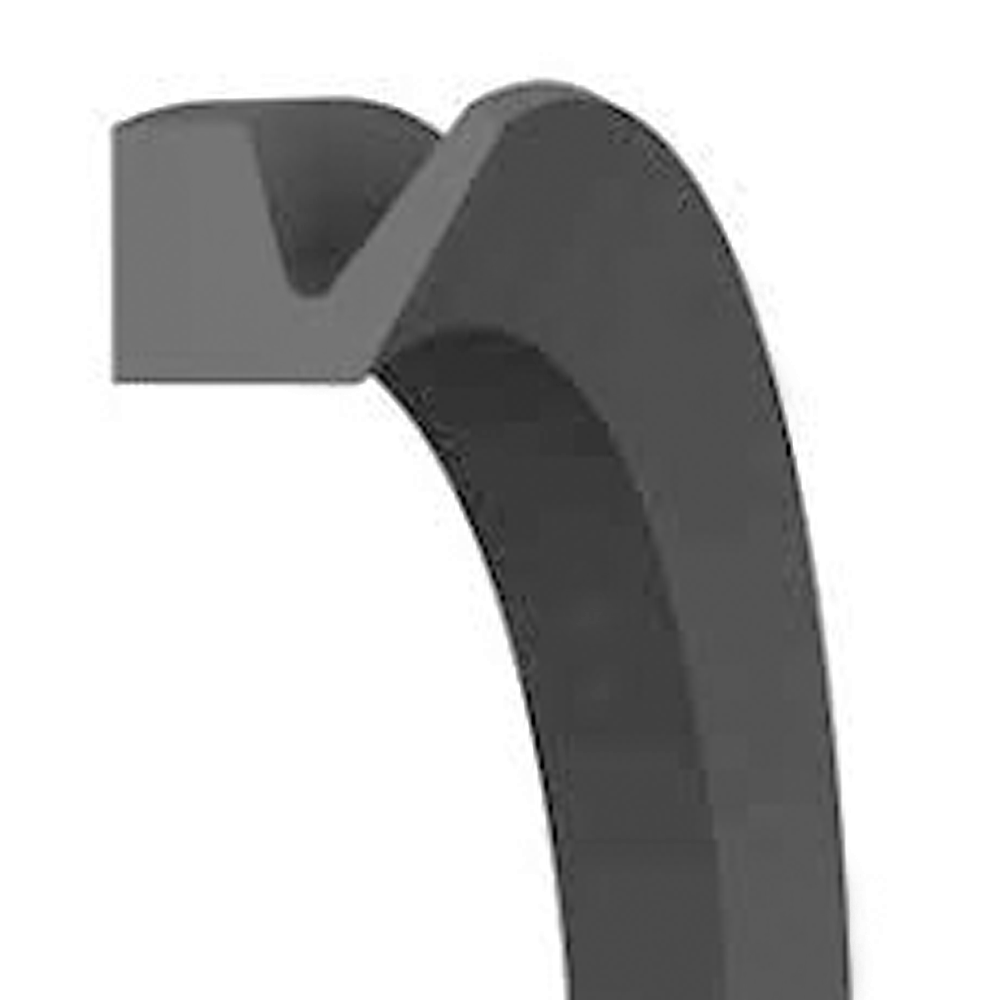
Non-contact seals made from compressed felt. Provide basic dust exclusion only — used in low-speed or legacy applications with light contamination.
Grease-Purged Seals
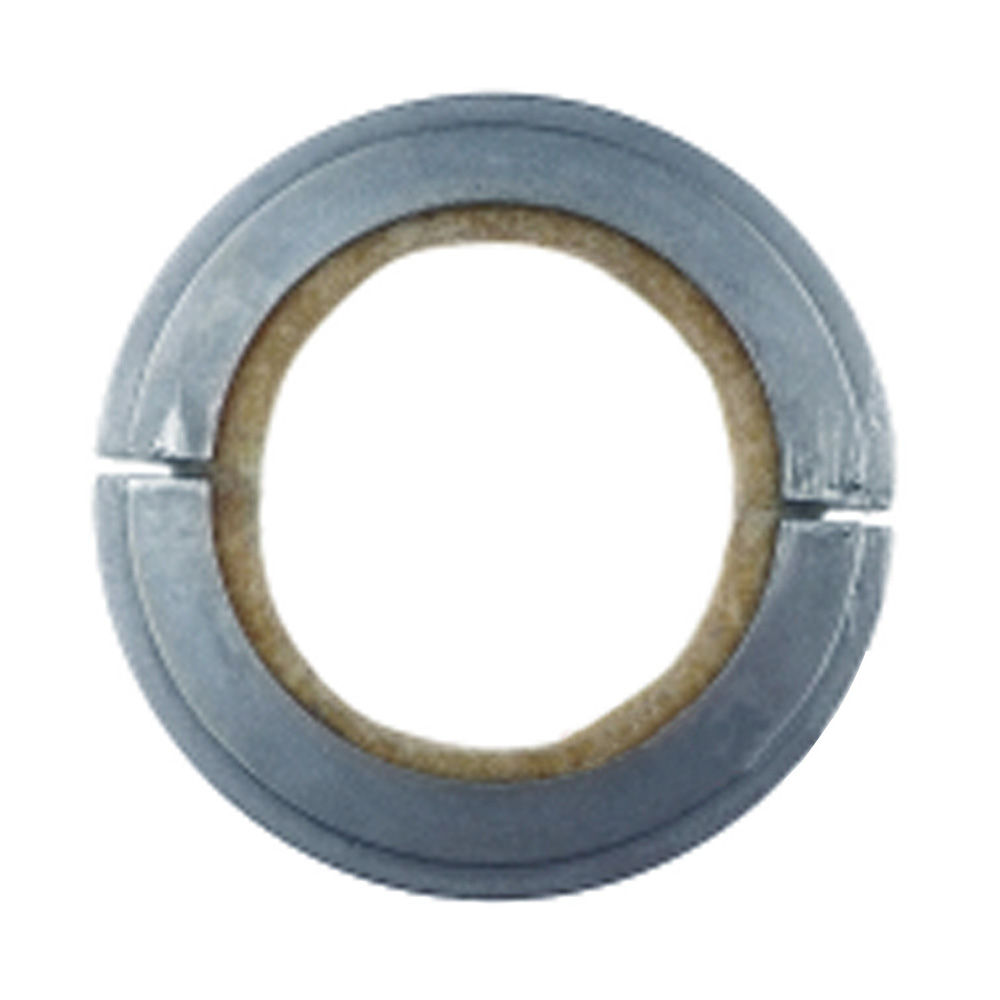
A constant grease flow actively pushes contaminants out of the sealing zone. Ideal for harsh outdoor environments and applications with regular water or liquid exposure.
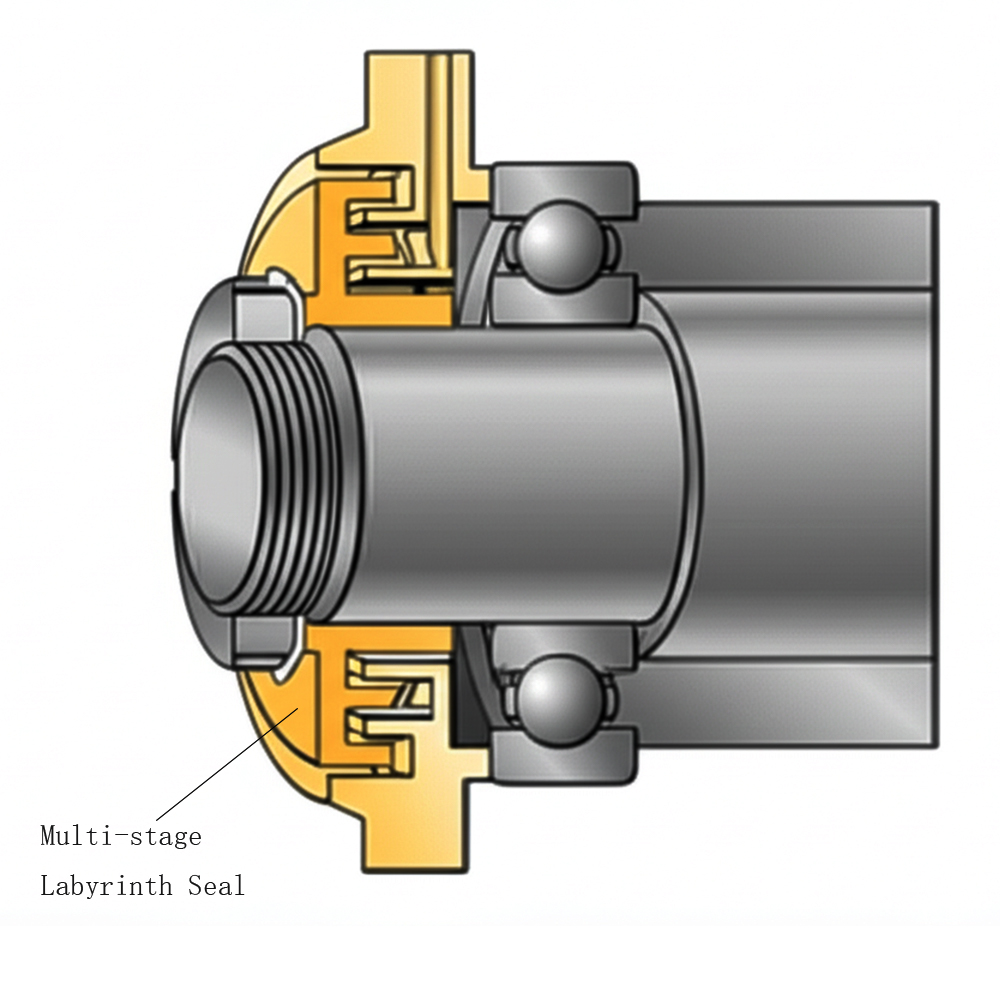
Labyrinth Seals
Non-contact metal seals using interlocking channels to deflect particles — zero friction, suitable for high-speed rotating equipment.
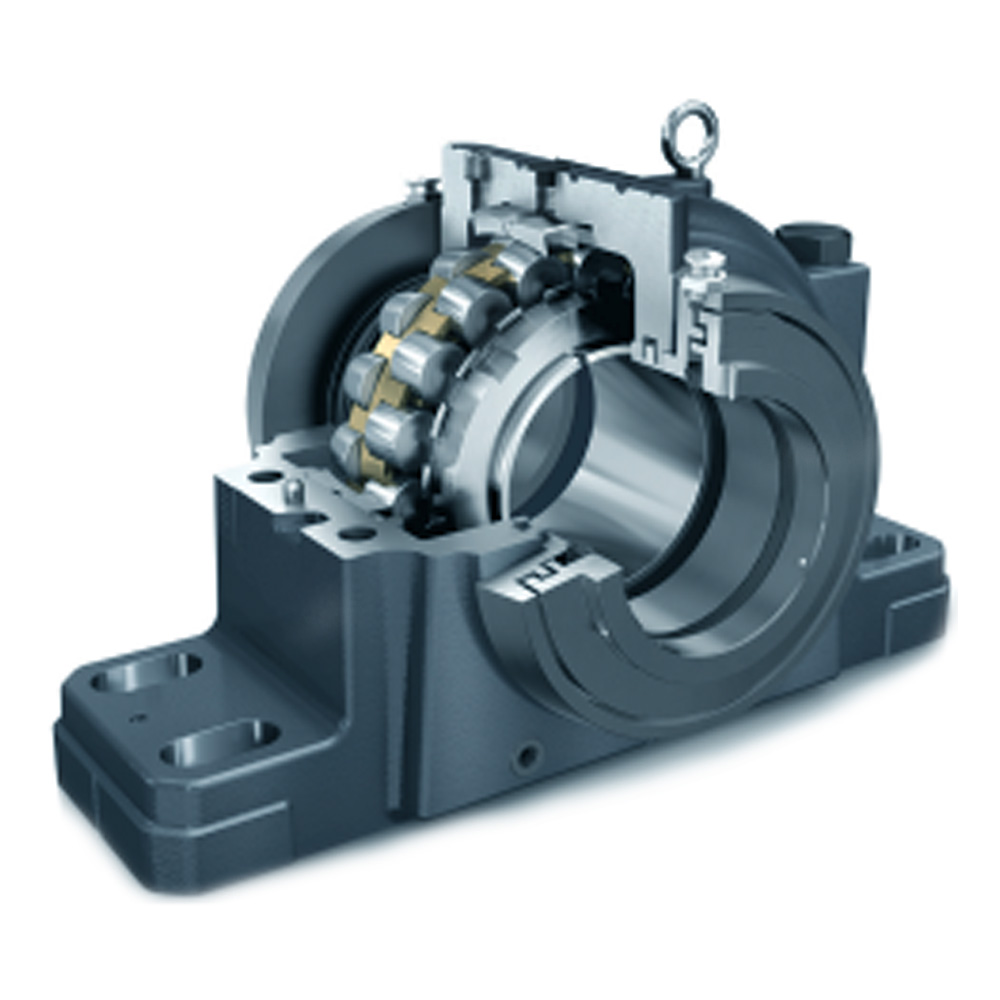
Taconite Heavy-Duty Seals
Ultra-durable multi-layer seals engineered for severe abrasive conditions in mining and heavy industry.
Do Pillow Block Bearings Require Lubrication?
It depends on the unit type and operating conditions.
Most standard indoor applications are well served by factory-sealed, maintenance-free units.
Re-greasable units are necessary in more demanding settings.
Maintenance-Free (Sealed)
Factory-filled with grease and sealed for life. Suitable for most indoor and standard-duty applications. No re-lubrication required.
Operating range: −20°C to +120°C standard; up to +180°C with high-temp grease.
Re-Greasable
Fitted with a Zerk fitting for periodic relubrication in the field. Required when sealed units can't meet environmental demands.
Interval: 1,500–2,500 hrs (clean); 200 hrs in dusty agricultural settings.
Use re-greasable units when any of the following apply:
Operating temperature exceeds 100°C (212°F)
High ambient contamination (dust, grit, moisture)
Regular liquid or washdown exposure
High humidity with intermittent operation (condensation risk)
Heavy loads where Cr/Pr < 10, or shaft speed below 10 rpm
High-speed, low-noise requirements (fans, HVAC units)
For grease selection guidance, see our Best Grease for Pillow Block Bearings.
How Often Should You Grease Pillow Block Bearings?
The lubrication frequency of pillow block bearings depends on operating conditions such as load, speed, temperature, and environment. There is no fixed schedule for every application, but the following guidelines are commonly used:
Normal operating conditions: Regrease every 3–6 months for applications such as conveyors, fans, and general machinery.
Heavy-duty applications: Bearings working under high loads or continuous operation may require lubrication every 1–3 months.
High-speed or harsh environments: Frequent inspection and lubrication may be needed, sometimes weekly or monthly, especially in dusty, wet, or high-temperature conditions.
Signs that a pillow block bearing needs grease include unusual noise, increased vibration, overheating, or dry and contaminated grease. However, avoid over-greasing, as excessive lubricant can increase friction and operating temperature, reducing bearing life. Regular inspection and using the correct grease type are essential for maintaining reliable performance.
How to Choose a Pillow Block Bearing
Work through these five factors in order.
Getting shaft size wrong makes everything else irrelevant; getting material wrong shortens service life regardless of correct sizing.
01. Bore Size (Shaft Diameter)
The bearing bore must match your shaft. Standard inserts are manufactured with a bore ~0.025 mm (0.001 in) larger than the nominal shaft diameter to achieve a controlled interference fit — not a gap fit.
For complete bore-to-model number tables: Pillow Block Bearing Size Chart (UCP200 series).
02. Load Capacity
Use the basic bearing life formula to verify capacity:
L₁₀ = (Cᵣ / Pᵣ)³
L₁₀: basic rating life (millions of revolutions) | Cᵣ: dynamic load rating | Pᵣ: equivalent applied load
Apply a safety factor of 1.2 for smooth loads and 2.0–3.0 for impact-heavy machinery. Full load analysis: Load Capacity & Performance Analysis.
03. Housing Shape & Mounting Dimensions
Confirm housing width, base length, overall height, shaft center height, bolt hole spacing, and bolt diameter against your frame dimensions. Even small errors here require ordering again.

04. Duty Level
"Duty" describes how well a bearing handles steady loads and working conditions over time, judged by how the equipment will be used and the loads it carries.

Light Duty: Suitable for light load operations, such as small equipment or low-speed applications.
Medium Duty: Designed to handle moderate loads, commonly found in general industrial machinery.
Heavy Duty: Made for applications with heavy loads or high pressure, such as mining or steel plant equipment.
05. Environmental Factors
Temperature: Standard units: −20°C to +120°C. Specialized units: up to +250°C (482°F).
Moisture / washdown: Stainless housing (AISI 304/316) + IP69K sealing.
Chemical exposure: Stainless or thermoplastic housing; FDA-approved grease for food applications.
Abrasive dust: Labyrinth or taconite seals; re-greasable units.
Vibration / shock: Spherical insert for self-alignment; heavy-duty locking mechanism.
When to Use Pillow Block Bearings?
Pillow block bearings are used when a rotating shaft needs simple, reliable, and easy-to-maintain support. They are an ideal choice for applications where the bearing needs to be mounted directly onto a machine frame and where moderate loads and speeds are expected.
You should consider using pillow block bearings when:
Easy installation is required: The mounted design allows quick installation without complex housing arrangements.
Shaft alignment may vary: Many pillow block bearings use self-aligning insert bearings that can compensate for minor shaft misalignment.
Regular maintenance is needed: The replaceable bearing insert makes inspection, lubrication, and replacement easier.
The application involves moderate loads and speeds: They are suitable for conveyors, fans, agricultural equipment, packaging machines, and general industrial machinery.
Cost-effective shaft support is important: Pillow block units provide a simple and economical solution compared with custom bearing housings.
However, for applications involving extremely high loads, very high speeds, severe shock loads, or extreme temperatures, a more specialized bearing arrangement, such as a plummer block with heavy-duty bearings, may be more suitable.
In summary, pillow block bearings are best used for general industrial applications that require easy mounting, reliable shaft support, and low maintenance costs.
Frequently Asked Questions
What is a pillow block bearing used for?
Pillow block bearings support rotating shafts in machinery, keeping them stable under radial and axial loads. They're found in conveyors, agricultural equipment, fans, food processing lines, pumps, and hundreds of other applications — anywhere a shaft needs a bolted-down support point.
What is another name for a pillow block bearing?
A pillow block bearing is also known as a mounted bearing unit, mounted bearing, or pillow block unit. In some regions, it may also be called a plummer block bearing, although technically plummer blocks usually refer to heavier-duty split housing designs. The term mounted bearing unit is the most general description because it combines a bearing insert with a housing for easy installation and shaft support. For industrial applications and product searches, pillow block bearing and mounted bearing unit are the most commonly used terms.
What size pillow block bearing do I need?
Start with your shaft diameter — that determines the bore size. Then confirm housing dimensions (base length, center height, bolt spacing) against your mounting frame. Use our Pillow Block Bearing Size Chart for complete model-by-model specifications.
What is the difference between a pillow block and a plummer block?
A pillow block comes as a complete pre-assembled unit — housing plus bearing insert. A plummer block is the housing only; you source and fit the bearing separately. Plummer blocks are typically used in heavier industrial applications where specific bearing grades are engineered to the load case.
How long do pillow block bearings last?
Service life varies widely by load, speed, contamination level, and lubrication. A correctly specified bearing in a clean, moderate-duty application can exceed 20,000 operating hours. In harsh agricultural conditions with abrasive dust and infrequent re-greasing, the same bearing might fail in under 1,000 hours. The L₁₀ formula gives a statistical prediction; proper seal selection and re-lubrication intervals determine real-world life.
How do I tell if a pillow block bearing is failing?
The four main warning signs are: abnormal noise (grinding, squealing, or clicking), excessive vibration felt through the housing, overheating (housing temperature more than 30°C above ambient without explanation), and visible grease leakage or seal damage. Any one of these warrants immediate inspection.
Which brands make pillow block bearings?
Major manufacturers include SKF, Timken, NSK, NTN, FAG (Schaeffler), Rexnord, Dodge, Sealmaster, and Link-Belt. For a detailed comparison of specifications, pricing tiers, and application strengths, see our Top Pillow Block Bearing Manufacturers in 2026.
How do I install a pillow block bearing correctly?
Key steps: clean and measure the shaft to verify tolerance, slide the bearing onto the shaft and align with mounting holes, tighten the locking mechanism (set screw, collar, or sleeve) to the specified torque, then bolt the housing to the frame. Never use the locking screw to draw the bearing into position — this damages the insert. Full procedure: How to Install Pillow Block Bearings.
Summary
Pillow block bearings are the most practical way to support a rotating shaft in the field: pre-assembled, self-aligning, and available in materials and seal configurations that cover everything from food lines to mining conveyors. The key to long service life is matching bore size, load rating, housing material, and seal type to your actual operating conditions — not just picking the cheapest unit that fits the shaft.
LILY Bearing manufactures pillow block bearings to ISO 9001 standards, with hole-to-hole housing tolerances held within ±0.2 mm for precision fitting.
About the Author


